The Veteran Who Refused to Retreat: How a St. Louis Father Overcame Homelessness to Raise Three Rising Stars
Long before he was a father, Gibran I. was a sailor in the United States Navy, serving his country during the Persian Gulf War. He was trained to handle the high stakes of military life, but nothing in his service prepared him for the quiet, devastating struggle he would face back on civilian soil.
At just three years old, Gibran had lost his own father, leaving his mother to navigate the grueling path of single parenthood alone. Growing up in that void, Gibran felt the absence of a roadmap. “I witnessed the struggle of single parenthood,” Gibran recalls. “I would say that as a child growing up, I needed more direction.”
The Cycle of Single Parenthood
Ironically, history seemed to repeat itself when Gibran became a single father at the age of 21. Following a two-year marriage and a relocation that ended in divorce, the veteran found himself facing the same daunting reality his mother once had. “The emotional support, having to figure out childcare, employment, and raising children—it is not easy,” Gibran says. “However, kids didn’t ask to be here.”
Testing the Resolve: Homelessness and Survival
Life continued to test Gibran’s resolve. A second marriage ended after four years due to instability and personal struggles. This time, the fallout was devastating. Gibran found himself homeless, living out of hotels and operating his car like a taxi just to survive. Yet, even in his darkest moments, his commitment to his children never wavered. “Despite being homeless, I was still able to pick up and drop off my children,” he says. “Having to stay in a hotel, as a taxi driver I was able to feed my children.”
Finding a Lifeline at FFSC
But internally, the pressure was reaching a breaking point. With low self-worth and mounting child support arrears, the man who once served in a war zone felt overwhelmed and alone. While seeking legal assistance to finalize his divorce, he was introduced to the Fathers & Families Support Center (FFSC). It was the lifeline he didn’t know he was looking for.
Accountability and Internal Growth
Enrolling in the six-week Family Formation program, Gibran discovered something life-changing: he wasn’t alone. The structure of the group and the motivation from the facilitators provided the direction he had craved since childhood. The program forced him to confront his own communication style—specifically his tendency to yell or be overly stern.
“If I would have enrolled sooner, I wouldn’t have pushed away people that I genuinely love,” Gibran admits. “The divorce was a tough thing to accept, and taking accountability for my shortcomings hit even harder.”
Gibran didn’t stop at the classroom. He took advantage of FFSC’s mental health resources, beginning a journey with therapy that continues to this day. “I choose to keep working on myself,” Gibran says. “The better I am, the better my children will be, and today I am proud to be able to be the example that they need.”
A Legacy Reclaimed: Success and Stability
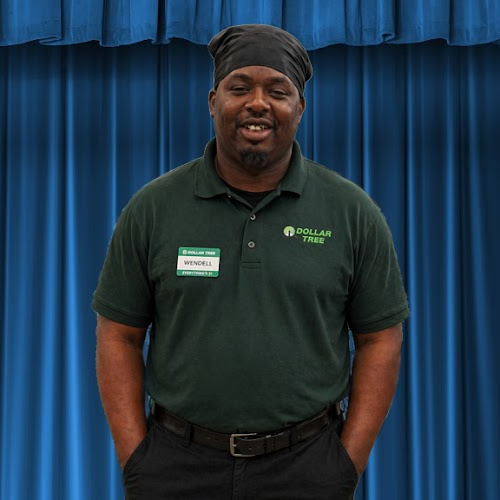
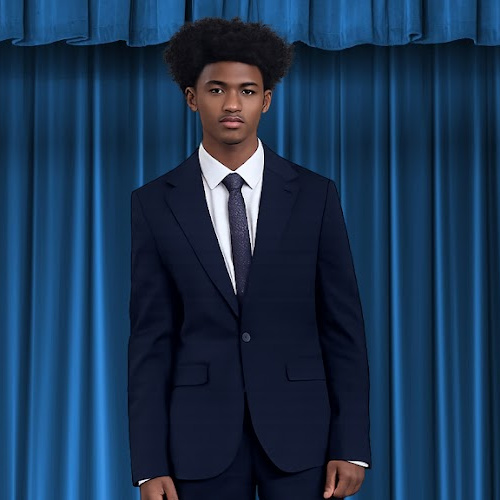
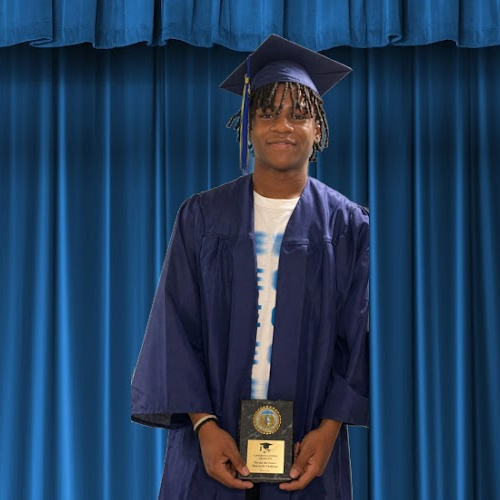
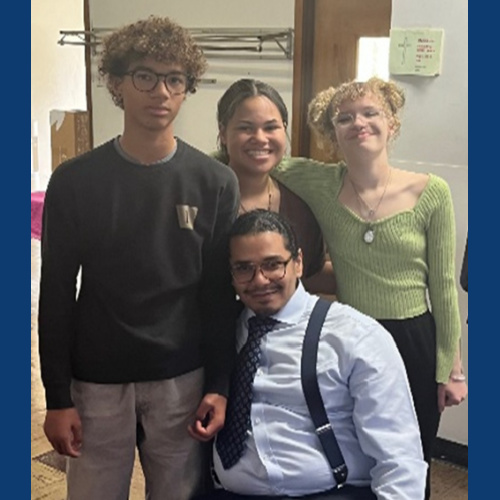
Today, Gibran Irving is a man transformed. The Navy veteran has returned to a life of service as a Legal Admin Specialist for the Department of Veterans Affairs. His greatest pride, however, lies in the success of his children, who have flourished as their father found his footing:
Naomi: Now serves the community at Stray Rescue St. Louis.
Luna: An aspiring artist heading to college next year.
Kahlil: An artist whose work has been featured in New York galleries.
His daughter Luna, who is headed to college next year to pursue her passion for art, recently traveled to Atlanta with Gibran to visit an art exhibit—a trip that would have been impossible during their years of instability. “I used to worry about where we were going to stay, but now we’re planning where I’m going to go to school,” Luna says. “My dad went from just surviving to making sure I have the chance to dream.” Even Gibran’s eldest son, Kahlil, whose artwork has been featured in New York galleries, sees the legacy his father is now building. “My art is about expression, and for a long time, my dad didn’t know how to express his struggle,” Kahlil reflects. “Seeing him find his voice at FFSC taught me that the strongest thing a man can do is ask for help.”
“I am grateful for FFSC and what they’re doing for not only fathers, but the St. Louis community as a whole,” Gibran says. He is no longer the child looking for direction; he is the father providing it.
Gibran’s transition from instability to professional and personal success highlights the multi-layered approach of Fathers & Families Support Center:
The FFSC Impact
- Honoring the Veteran: FFSC helped Gibran bridge the gap between his military service and civilian fatherhood, providing the “structure” and “mission” he needed to stabilize his life.
- Mental Health & Accountability: By providing access to therapy, FFSC helped Gibran move from “low self-worth” to taking full accountability for his actions and his future.
- Communication Mastery: The Family Formation program broke Gibran’s cycle of reactive communication, teaching him how to lead his family with patience rather than sternness.
- Professional Reintegration: The stability Gibran gained allowed him to secure a career with the Department of Veterans Affairs, while also pursuing his passion for photography.
- Breaking the Cycle: The “struggle of single parenthood” Gibran witnessed at age three has been replaced by a new legacy of support, evidenced by his children’s professional and academic achievements.