
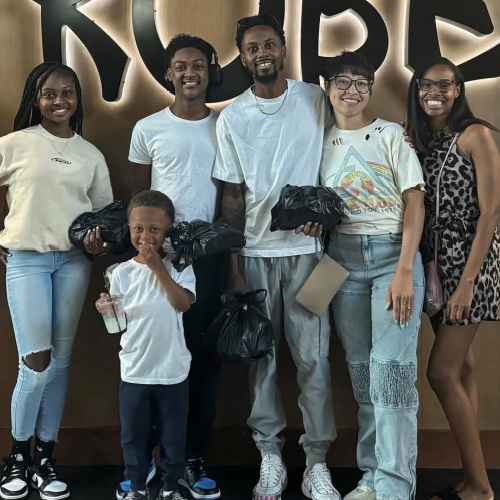
The Power of an Apology: How Antonio Found His Way Back to His Children
It started with a persistent nudge. At the urging of his wife of six years, Antonio finally turned to a Google search to find help —a simple act that ultimately became the bridge back to the son he hadn’t seen in years.
Before finding Fathers & Families Support Center (FFSC), Antonio felt the heavy weight of silence. “I couldn’t afford legal fees, I didn’t know my rights as a father, and I had not loved on my oldest son in years,” Antonio shares. Unhealed trauma and a breakdown in communication had led to a failed relationship with the mother. When she moved out of town, Antonio lost all contact. “Not being able to see or talk to my son truly weighed on my mental health.”
A Determination to Change the Narrative
Growing up without his own biological father, Antonio was determined to break the cycle. He had a stepfather, but the void remained. “I didn’t want the same situation for my son,” he says. In 2023, Antonio enrolled in FFSC’s 6-week Family Formation program. While he initially sought legal and employment aid, he discovered something more profound: the power of accountability. “I thought that it was all about me,” Antonio reflects. “I realized that instead of communicating, I would walk off or choose not to engage in much-needed conversation.”
The Strength of Accountability
Through the camaraderie of his classmates and the guidance of FFSC’s legal team, Antonio was able to locate his eldest son’s mother. But instead of a high-conflict legal battle, Antonio used his new communication skills to offer an apology. It changed everything. The mother eventually moved back to St. Louis, and they established a successful co-parenting plan built on mutual respect. Today, Antonio’s presence is felt deeply by every one of his children.
Restoring the Father-Son Bond
The most profound change is the bond with his 16-year-old son. “I’m just glad he never gave up on me,” he says. “For a long time, there was just a lot of noise and distance, but he did the work to find me and make things right. I love my dad, and I’m proud of the man he’s become.” His daughter, who now shares a weekly tradition with her father, sees him as her biggest advocate. “My favorite part of the week is getting our nails done together,” she says. “He tells me I can be anything I want to be in this world. He’s not just my dad; he’s my biggest cheerleader.”
Modeling Manhood Through Action
For his younger sons, the lessons are learned side-by-side during weekend chores. “He doesn’t just tell us how to be a good man; he shows us every day,” one of his sons explains. “Working in the yard with him, I see how hard he works for our family. He makes me want to be just like him.” That emotional presence is backed by newfound stability. Once stuck in minimum-wage jobs with no room for growth, Antonio worked with FFSC’s Employment Development & Mentoring Program to overhaul his resume and interview style.
Building a Legacy of Stability
Today, he is a successful Operations Manager, providing medical insurance for his family and supporting his children’s mothers with additional necessities. He and his wife have even expanded their reach into small business ownership and property investment. “I want my children to understand that they can be themselves in a world with so many expectations,” Antonio says. “Being a part of their lives is one of God’s biggest blessings.”
The FFSC Impact
Family Reunification: Transitioned from years of zero contact to a collaborative 50/50 co-parenting agreement and a restored relationship with his 16-year-old son.
Economic Mobility: Shifted from “dead-end” jobs to a career in Operations Management, while simultaneously launching a small business and investing in local property.
Emotional Intelligence: Completed 120+ hours of curriculum focused on trauma-informed communication, accountability, and individualized parenting.
Financial Responsibility: Antonio now provides medical insurance and consistent financial support for all four of his children, removing the burden from the custodial mothers.